 Tim Wander
A good list of cities to visit in Europe for arts, culture, fashion, history, and architecture
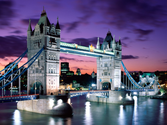
London is the capital of England and the United Kingdom (UK). It is Britain's largest and most populous metropolitan area. London is a leading global city being the world's largest financial centre alongside New York City.
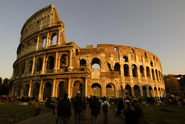
Rome is the capital of Italy and the country's largest and most populated municipality (central area), with over 2.7 million residents. Rome's history spans over two and a half thousand years. It was the capital city of the Roman Kingdom, the Roman Republic and the Roman Empire, which was a major political and cultural influence in the lands bordering the Mediterranean Sea for over four hundred years from the 1st Century BC until the 4th Century AD.
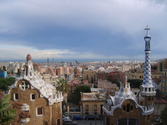
Barcelona (Catalan pronunciation: [bəɾsəˈlonə], Spanish: [baɾθeˈlona]) is the capital and the most populous city of the Autonomous Community of Catalonia and the second largest city in Spain.
Founded as a Roman city, Barcelona became the capital of the Counts of Barcelona. After merging with the Kingdom of Aragon, it became one of the most important cities of the Crown of Aragon.
Barcelona is today an important cultural centre and a major tourist destination and has a rich cultural heritage.
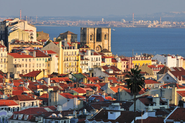
is the capital and largest city of Portugal. The Lisbon region is the wealthiest region in Portugal and it is well above the European Union's GDP per capita average – it produces 37% of the Portuguese GDP. It is also the political centre of the country, as seat of government and residence of the Head of State.
Florence is the capital city of the Italian region of Tuscany and of the province of Florence. A center of medieval European trade and finance and one of the richest and wealthiest cities of the time, Florence is often considered the birthplace of the Italian Renaissance
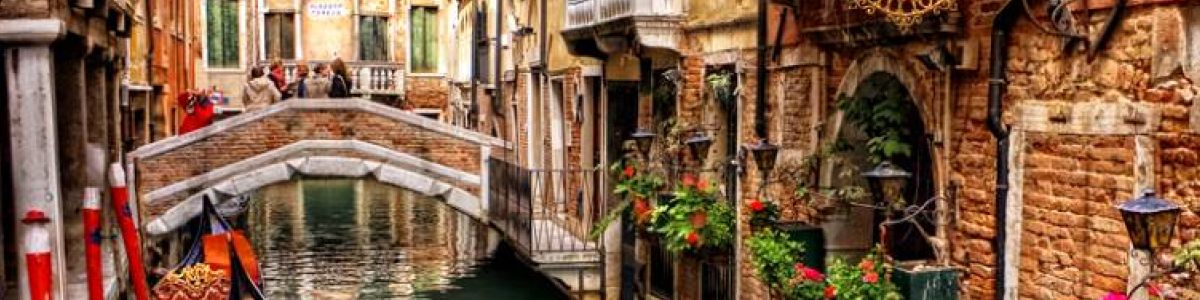
Venice (Italian: Venezia) is a city in northern Italy, the capital of the region Veneto. The city stretches across 117 small islands in the marshy Venetian Lagoon along the Adriatic Sea in northeast Italy.
The Republic of Venice was a major maritime power during the Middle Ages and Renaissance, as well as a very important center of commerce (especially silk, grain and spice trade) and art in the 13th century up to the end of the 17th century.
Paris is home to the association football club Paris Saint-Germain FC and the rugby union club Stade Français. The 80,000-seat Stade de France, built for the 1998 FIFA World Cup, is located in Saint-Denis. Paris hosts the annual French Open Grand Slam tennis tournament on the red clay of Roland Garros.
Prague has been a political, cultural, and economic centre of central Europe with waxing and waning fortunes during its 1,100-year existence. Founded during the Romanesque and flourishing by the Gothic and Renaissance eras, Prague was not only the capital of the Czech state, but also the seat of two Holy Roman Emperors and thus also the capital of the Holy Roman Empire.
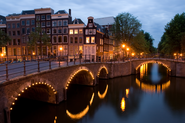
Amsterdam is the capital and largest city of the Netherlands. The city is the financial and cultural capital of the Netherlands. Amsterdam's main attractions, including its historic canals, the Rijksmuseum, the Van Gogh Museum, Stedelijk Museum, Hermitage Amsterdam, Anne Frank House, its red-light district, and its many cannabis coffee shops draw more than 3.66 million international visitors annually.
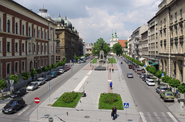
Kraków (Polish pronunciation: [krakuf] listen), also spelled Krakow or Cracow (English pronunciation: /ˈkrækaʊ/ listen), is the 2nd largest and one of the oldest cities in Poland and a popular tourist destination. Its historic center was inscribed on the list of World Heritage Sites as the first of its kind.
Kraków has traditionally been one of the leading centers of Polish academic, cultural and artistic life, and is one of Poland's most important economic centers.
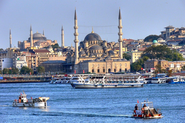
Istanbul ( Turkish: İstanbul) is the largest city in Turkey, constituting the country's economic, cultural, and historical heart. With a population of 14.1 million, the city forms one of the largest urban agglomerations in Europe and is the third-largest city in the world by population within city limits.
Vienna (pronounced /viːˈɛnə/; German: Wien [ˈviːn]; Austro-Bavarian: Wean) is the capital of the Republic of Austria and one of the nine states of Austria.
It is the 10th largest city by population in the European Union. Vienna is host to many major international organizations such as the United Nations and OPEC. In 2001, the city center was designated a UNESCO World Heritage Site.
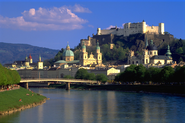
Salzburg (Austro-Bavarian: Såizburg; literally: "Salt Castle") is the fourth-largest city in Austria and the capital of the federal state of Salzburg.
Salzburg's "Old Town" (Altstadt) with its world famous baroque architecture is one of the best-preserved city centres north of the Alps, and was listed as a UNESCO World Heritage Site in 1997. The city is noted for its Alpine setting. It is the birthplace of 18th-century composer Wolfgang Amadeus Mozart.
In the mid-20th century, the city was the setting for parts of the musical and film The Sound of Music, which also features famous landmarks in Austria.
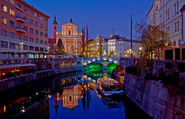
Capital of Slovenia. Despite the appearance of large buildings, especially at the city's edge, Ljubljana's historic centre remains intact; there, Baroque and Art Nouveau styles mix. The city is strongly influenced by the Austrian fashion in the style of Graz and Salzburg.
The old city is made up of two districts: one includes Ljubljana town hall and the principal architectural works; the other, the neighbourhood of the Chevaliers de la Croix, features the Ursuline church, the philharmonic society building (1702) and the Cankar Hall.
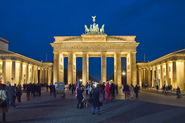
Berlin is best known for its historical associations as the German capital, internationalism and tolerance, lively nightlife, its many cafes, clubs, and bars, street art, and numerous museums, palaces, and other sites of historic interest.
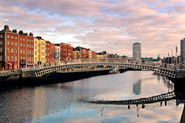
A convivial metropolis pulsating with laughter and pints, Dublin is highly regarded as one of the friendliest capital cities in the world. Music and dancing linger on every corner, as do bright eyed bards willing to share a playful tale. Intertwined seamlessly with the old is the young and modern.
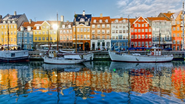
Copenhagen is the capital and most populous city of Denmark. The city's origin as a harbour and a place of commerce is reflected in its name. Its original designation, from which the contemporary Danish name is derived, was Køpmannæhafn, meaning "merchants' harbour", often simply Hafn or Havn. The English cognate would be Chapman's haven.
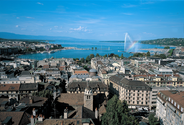
For other places with the same name, see Geneva (disambiguation). Geneva (French: Genève, German: Genf) ] is Switzerland's second-most populous city and is one of the world's major centers of international diplomacy, having served as the site of the initial headquarters of the International Committee of the Red Cross.
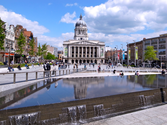
Wonderful city in the heart of England. Famous for Robin Hood and his Merry men
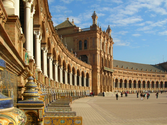
Visiting Valencia, in Spain, is one of the most enriching experiences. It is very easy to discover all chic places of the city having a good company. You can observe the most emblematic monuments of the city like the Main Square, the bullring or the Cathedral. There are tens of activities in this city of the Mediterranean Coast.
Although we have already been talking many times about the beautiful city of Seville, this is a good occasion to go back once again. And to its one of the most important celebrations: the Seville Fair. During one week, this city of Andalusia transforms into color, music and tradition and this year it will be celebrated from the 6th to the 11th May.
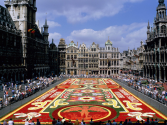
Brussels has grown from a 10th-century fortress town founded by a descendant of Charlemagne into a metropolis of more than one million inhabitants. The metropolitan area has a population of over 1.8 million, making it the largest in Belgium.
Tirana is the capital and the largest city of Albania. Modern Tirana was founded as an Ottoman town in 1614 by Sulejman Bargjini, a local ruler from Mullet. Tirana became Albania’s capital city in 1920 and has a population of 400,000, with metro area population of 763,634. The city is host to public institutions and private universities, and is the centre of the political, economical, and cultural life of the country.
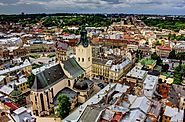
Mysterious and architecturally lovely, this Unesco World Heritage Site exudes the same authentic Central European charm as pre-tourism Prague or Kraków once did. Its quaint cobbles, bean-perfumed coffeehouses and rattling trams are a continent away from the post-Soviet badlands to the east. Read more: http://www.lonelyplanet.com/ukraine/western-ukraine/lviv#ixzz3w1HJ5qrf
#ukraine #lviv #CentralEurope